Wholesale Meat Supplier Sydney: 10 Questions to Ask
Before you sign with a wholesale meat supplier in Sydney, ask these 10 questions. Covers NSW Food Authority licensing, delivery temperatures, cut specs, MSA grading, pricing, minimum orders and credits.
In the editor, click the HTML button and paste body.html. Or copy from the first line below down to the last FAQ answer.
Before you sign with a wholesale meat supplier in Sydney, confirm five things: they hold a NSW Food Authority licence, their trucks keep meat at 5°C or colder, they cut to a written spec every time, their prices and minimums are clear, and they credit shorts quickly. Meat is usually the most expensive line on a restaurant invoice, so a poor supplier costs more here than anywhere else. These 10 questions help you compare suppliers before you commit.
Key takeaways
A wholesale meat supplier Sydney venues use must be licensed with the NSW Food Authority, and so must the vans that deliver the meat.
Chilled meat should arrive at 5°C or colder, and frozen meat should arrive frozen hard.
Order to a written spec: cut, weight range, trim, grade and pack. Vague orders lead to inconsistent plates and food cost.
MSA grading is a voluntary beef and lamb eating quality system that some suppliers offer. Ask whether yours does.
Compare suppliers on yield and consistency, not just price per kilo.
What is a wholesale meat supplier?
A wholesale meat supplier is a business that sells beef, lamb, pork, poultry and other meat in trade quantities to restaurants, cafés, caterers and other food businesses, usually cut to order and delivered. In Sydney, that includes wholesale butchers, meat processors with their own delivery runs, and broadline distributors that carry a meat range.
Unlike buying from a retail butcher, a wholesale account usually comes with set delivery days, minimum orders, cut-to-spec options and trade payment terms.
What should you ask a wholesale meat supplier before you sign?
Ask every supplier on your shortlist the same 10 questions, and get the important answers in writing.
1. Are you licensed with the NSW Food Authority?
Under the NSW Food Authority licensing rules, businesses that handle, process, pack or store red meat or poultry must hold a Food Authority licence, and so must businesses that transport those foods. Ask for the licence number and the name of the licensed business, and check it matches the invoice.
2. How do you keep meat cold during delivery?
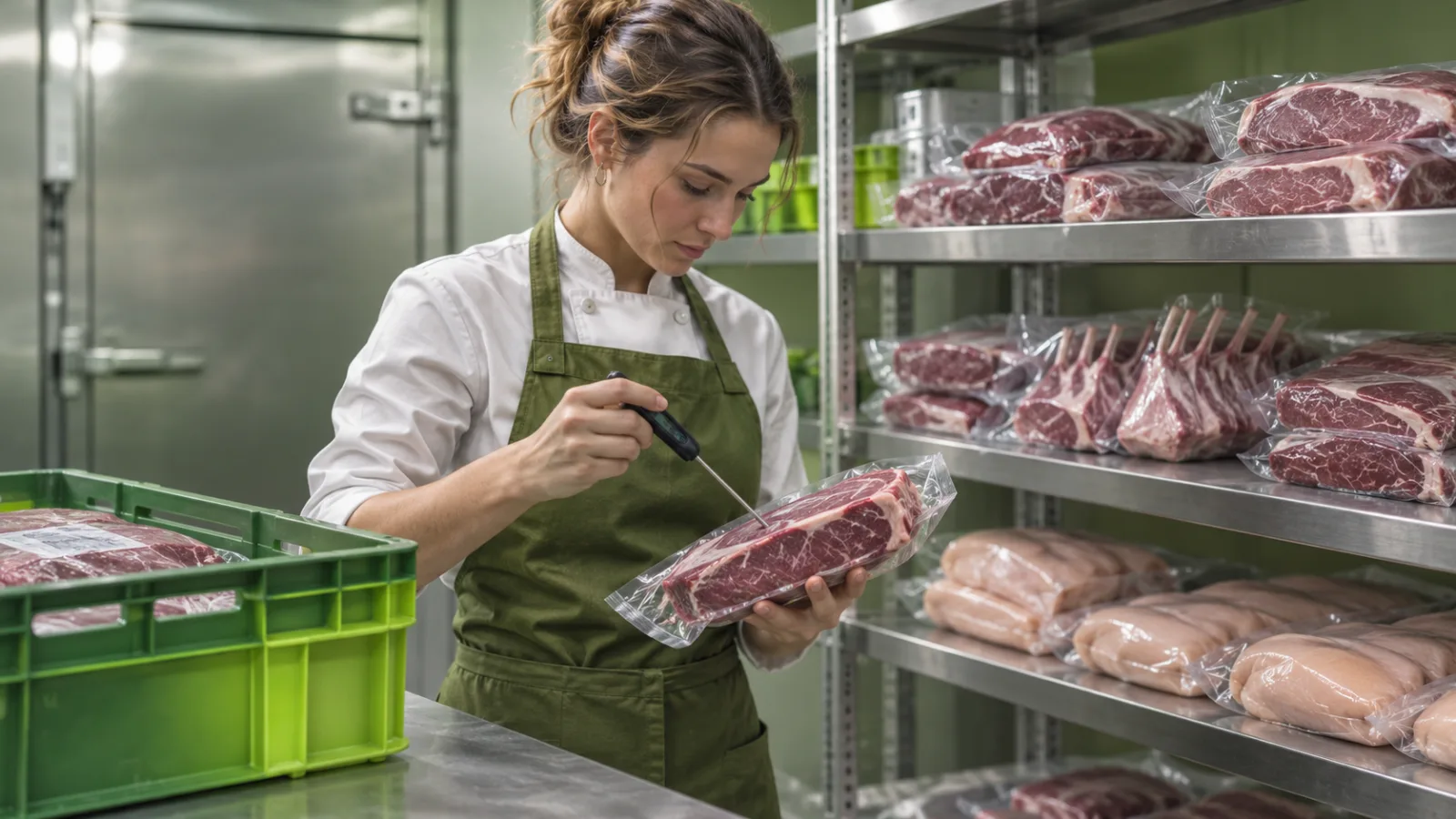
The FSANZ guidance on receiving food says chilled food should be delivered at 5°C or colder and frozen food frozen hard. Ask whether deliveries come in refrigerated vans, and whether the driver will wait while you probe the meat. In NSW, the Food Authority issues a licence label for licensed meat vans, so look for it on the vehicle.
3. Can you cut to my written spec?
A spec tells the supplier exactly what you want: the cut, portion weight or weight range, fat trim, bone in or out, and how it is packed. Many Australian suppliers use the AUS-MEAT language and the Handbook of Australian Meat to describe cuts, which gives you and the supplier a shared way to name each product. Ask them to confirm your spec in writing and stick to it on every order.
4. What grade and origin is the meat?
Ask where the meat comes from, whether beef is grass-fed or grain-fed, and whether they offer MSA graded beef or lamb. Meat Standards Australia (MSA) is an eating quality grading program run by Meat & Livestock Australia, and MSA licensed wholesalers and food service businesses must follow its standards manual. If a supplier sells MSA product, the grade should appear on the carton label.
5. How is the meat packed and labelled?
Ask whether cuts come vacuum packed, in trays or loose in cartons, and what is on the label: product, weight, packed date and use-by date. Vacuum-packed meat usually lasts longer in the cool room and is easier to rotate. Good labels make first-in, first-out stock rotation simple for your team.
6. Which days do you deliver, and what is the cut-off?
Check delivery days to your suburb, the delivery window and the order cut-off time. If you need specific cuts or large orders for a weekend, ask how much notice they need.
7. What is your minimum order and delivery fee?
Ask for the minimum order value per drop and any fee if you fall under it. A high minimum can force you to over-order meat, which ties up cash and cool room space.
8. How are prices set, and how often do they change?
Ask whether prices are fixed for a period or change weekly, and how you will see new prices before you order. Ask whether you can lock in prices on your main lines for a month or a season, and how they handle big market moves.
9. What happens with shorts, substitutions and quality problems?
Ask how they tell you about shortages, whether they substitute without asking, and how fast they credit meat that arrives warm, underweight, off-spec or damaged. Agree that you can reject anything that does not meet your spec or temperature.
10. What are your payment terms?
Ask whether they want card on order, cash on delivery or a trade account on 7, 14 or 30 day terms. Before you pay the first invoice, check their ABN and GST status on ABN Lookup.
How do you compare meat suppliers on price?
Price per kilo is only part of the cost. Two suppliers can quote the same price but give you very different results on the plate.
What to compare | Why it matters | How to check |
|---|---|---|
Price per kilo | The headline cost | Get quotes on the same spec from each supplier |
Yield after trim | Extra fat or sinew means less usable meat | Weigh a cut before and after you trim it |
Portion consistency | Uneven portions break your menu costing | Weigh a sample of portions from each delivery |
Shelf life | Longer life means less waste | Check packed and use-by dates on arrival |
Delivery fees and minimums | Adds to the real cost per kilo | Add fees to your total spend for the week |
Credits and shorts | Missing stock costs you sales | Track shorts and how fast credits arrive |
A cheaper striploin that needs more trimming can end up costing more per usable kilo than a dearer one cut closer to spec.
How do you trial a new meat supplier?
Write your specs. List your top 10 to 15 meat lines with cut, weight range, trim and pack.
Get quotes on the same specs. Send the list to two or three licensed suppliers.
Check licence and ABN. Confirm their NSW Food Authority licence and ABN before you open an account.
Trial one or two lines. Move a few cuts for two to four weeks while keeping your current supplier for the rest.
Record every delivery. Note temperature, weight, trim, labels and any shorts.
Do a yield test. Trim and portion a cut from each supplier and compare usable weight and cost per portion.
Decide and move in stages. If the trial works, move more lines, one group at a time.
What are the red flags with a meat supplier?
They cannot show a NSW Food Authority licence, or the delivery van has no licence label.
Chilled meat arrives above 5°C, or frozen meat arrives partly thawed.
Cuts arrive off-spec, with more fat or uneven portions than agreed.
Labels are missing packed or use-by dates.
Prices on the invoice differ from the quote without notice.
Credits for short or rejected meat take weeks.
For a wider checklist that covers every type of food supplier, read our guide on how to choose a wholesale food supplier in Sydney.
How can you keep meat costs under control?
Once you have the right supplier, keep checking. Weigh deliveries, compare invoices with your orders, and re-cost your dishes when meat prices move. If you run several suppliers, foodsupplier.au lets Sydney venues bring their existing suppliers, including meat and poultry suppliers, into one account, track prices and match invoices to orders in one place.
FAQ
Does a wholesale meat supplier need a licence in NSW?
Yes. In NSW, businesses that handle, process, pack or store red meat or poultry must hold a NSW Food Authority licence, including retail butchers. Businesses that transport meat must also be licensed. Ask your supplier for their licence details and check that licensed meat vans carry the Food Authority licence label.
What temperature should meat be delivered at?
Chilled meat should be delivered at 5°C or colder, and frozen meat should arrive frozen hard, not partly thawed. Use a probe thermometer to check a few items on every delivery, and reject any meat outside these limits. Record the temperatures so you have evidence if you need a credit.
What is MSA beef?
MSA stands for Meat Standards Australia, an eating quality grading program for beef and lamb run by Meat & Livestock Australia. It is voluntary, so not every supplier offers it. MSA graded product is identified on the packaging or carton label, which helps restaurants buy beef with a more predictable eating quality.
What is a meat spec?
A meat spec is a written description of exactly what you want from your supplier: the cut, portion weight or weight range, fat trim, bone in or out, grade and packing. Clear specs help you get the same product every time, keep portion costs steady and make it easy to compare quotes from different suppliers.
How do I compare prices between meat suppliers?
Ask each supplier to quote on the same written spec, then compare cost per usable kilo, not just price per kilo. Do a yield test by trimming and portioning a cut from each supplier. Add delivery fees and minimum order costs, and track how often each supplier shorts or delays your order.
Should a restaurant use more than one meat supplier?
Many restaurants use one main meat supplier for everyday cuts and a second supplier for specialty items or as a backup. This gives you a fallback if your main supplier runs short. Keep the second account active with small regular orders so it is ready when you need it.